morton m27 water softener manual
Morton M27 Water Softener Manual: A Comprehensive Guide
This comprehensive guide details the installation, operation, and maintenance of your Morton System Saver water softener, specifically models M20, M27, M30, and M34.
It provides essential instructions for programming, troubleshooting, and ensuring optimal performance of your water softening system, as found in available manuals.
Access to detailed specifications and performance claims for each model, including regeneration control details, is readily available within this resource.
The Morton M27 water softener is a demand-initiated, highly efficient system designed to remove hardness minerals like calcium and magnesium from your water supply. As part of the Morton System Saver series – encompassing models M20, M30, and M34 – the M27 offers reliable water softening for residential use.
This manual serves as a complete resource, guiding you through every aspect of owning and maintaining your M27. Whether you’re a first-time water softener owner or familiar with the technology, this guide provides clear, step-by-step instructions. It covers everything from initial installation and programming regeneration cycles to troubleshooting common issues and understanding the control valve’s functions.
Understanding your M27’s capabilities is crucial for maximizing its lifespan and ensuring consistently soft water. The demand regeneration control optimizes salt and water usage, contributing to both cost savings and environmental responsibility. This guide will empower you to effectively manage your system and enjoy the benefits of softened water throughout your home.
Understanding Water Softening Basics
Water softening is the process of removing dissolved minerals, primarily calcium and magnesium, which cause water hardness. Hard water can lead to scale buildup in pipes and appliances, reducing their efficiency and lifespan. It also affects soap’s ability to lather, requiring more detergent for cleaning.
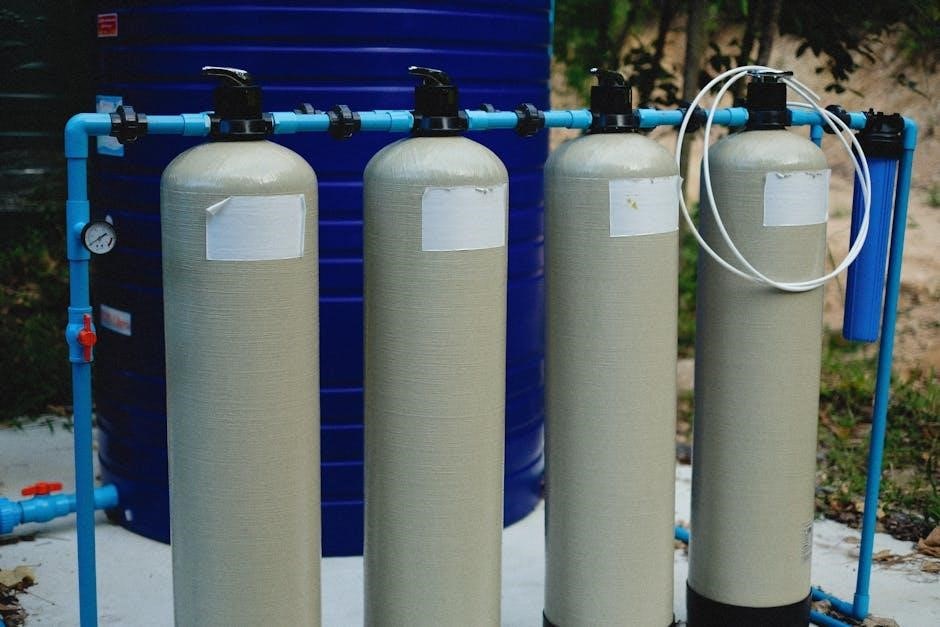
The Morton M27 utilizes ion exchange, a proven method for water softening. Inside the unit, resin beads attract and hold hardness minerals, replacing them with sodium or potassium ions. This process effectively eliminates the issues associated with hard water, providing numerous benefits for your home.
Regeneration is a critical component of the softening process. Periodically, the resin beads become saturated with hardness minerals and require recharging with a brine solution (saltwater). The M27’s demand-initiated control automatically initiates regeneration cycles based on water usage, ensuring optimal performance and minimizing salt consumption.
Installation of the Morton M27
Proper installation is crucial for optimal performance. This section details unpacking, plumbing connections, electrical setup, and drain line installation, following the manual’s guidance.
Unpacking and Inspection
Upon receiving your Morton M27 water softener, carefully inspect the shipping carton for any signs of damage during transit. If damage is evident, immediately document it with photographs and notify the carrier and retailer.
Carefully unpack the unit, ensuring all components are present. Refer to the included parts list within the installation and operation manual to verify everything is accounted for. Typical components include the softener tank, control valve, brine tank, and various connecting fittings.
Thoroughly inspect each component for any manufacturing defects or damage that may have occurred during shipping. Pay close attention to the control valve, brine tank, and any plastic components, looking for cracks or breaks. If any defects are found, contact Morton customer support for assistance and potential replacement parts before proceeding with installation. Retain all packaging materials until the installation is complete and you are satisfied with the condition of the unit.
Tools and Materials Required
Before beginning the installation of your Morton M27 water softener, gather all necessary tools and materials to ensure a smooth and efficient process. Essential tools include a pipe wrench, adjustable wrench, screwdriver (both Phillips and flathead), Teflon tape, and a bucket.
You will also require appropriate plumbing materials such as copper or PEX piping, fittings (couplings, elbows, adapters), and solder or crimp rings depending on your chosen piping method. A drain line capable of handling the softener’s discharge is crucial, along with a suitable drain connection.
Electrical access is needed for the control valve, so ensure a grounded electrical outlet is nearby. Additional materials may include a bypass valve kit (recommended), and a supply of water softener salt. Always consult the manual for a complete and specific list tailored to your installation scenario, prioritizing safety and code compliance.

Plumbing Connections – Inlet & Outlet
Establishing proper inlet and outlet plumbing connections is vital for the successful operation of your Morton M27 water softener. Begin by identifying the inlet and outlet ports on the softener unit – typically marked accordingly. Ensure the water supply is shut off before commencing any plumbing work.
Apply Teflon tape to the threads of all pipe fittings to prevent leaks. Connect the water supply line to the inlet port, and the softened water outlet to your home’s plumbing system. Use appropriate fittings (couplings, adapters) to match your existing pipe material (copper, PEX, etc.).
Proper alignment is crucial to avoid strain on the connections. After connecting, slowly turn the water supply back on and carefully inspect all joints for leaks. Tighten connections as needed, but avoid over-tightening. A bypass valve, installed upstream, allows for maintenance without interrupting water supply;
Drain Line Installation
Correct drain line installation is essential for efficiently removing brine water during the regeneration cycle of your Morton M27. The drain line must connect to a suitable drain – a floor drain, laundry tub, or standpipe – and must adhere to local plumbing codes.
Use a ¾-inch diameter pipe for the drain line, ensuring it’s made of a material compatible with the brine solution. Avoid direct connection to a sewer line, as backflow prevention is critical. An air gap, at least 2 inches, between the drain line’s outlet and the drain opening is mandatory to prevent contamination.
Secure the drain line to prevent siphoning or accidental disconnection. Ensure the line has a continuous downward slope to facilitate drainage. Avoid sharp bends or kinks that could restrict flow. Regularly inspect the drain line for clogs or leaks, maintaining optimal softener performance.
Electrical Connection
Proper electrical connection is crucial for the operation of your Morton M27 water softener’s control valve. Ensure the power supply matches the voltage specified on the softener’s data plate – typically 120V AC, 60Hz. A dedicated grounded circuit is highly recommended to prevent interference from other appliances.
Use a properly sized electrical cord, suitable for outdoor use if the softener is not located in a fully conditioned space. Connect the cord to a grounded outlet, avoiding extension cords whenever possible. If an extension cord is necessary, it must be heavy-duty and grounded.
Before making any electrical connections, disconnect power at the circuit breaker. Double-check all connections for tightness and proper grounding. Never work with electrical components while standing in water or on a wet surface. Consult a qualified electrician if you are unsure about any aspect of the electrical installation.

Operation of the Morton M27

Successfully operating your Morton M27 involves initial startup, setting the time and date, programming regeneration cycles, and monitoring water usage and salt levels.
Understanding the control valve is key to efficient operation and maintaining consistently soft water throughout your home’s plumbing system.
Initial Startup Procedure
Before initiating the initial startup of your Morton M27 water softener, ensure all plumbing and electrical connections are securely in place, as detailed in the installation manual. Verify the brine tank is filled with water to the appropriate level, and add the recommended amount of salt – typically rock salt or solar salt – to initiate the brine-making process.
Once connected and filled, slowly open the main water supply valve to allow water to enter the system. Allow the resin bed to fully saturate with water; this may take several minutes. Bypass valve should be in the service position. Monitor for any leaks around the connections during this initial filling phase.
After the resin bed is saturated, initiate a manual regeneration cycle. This first regeneration cycle is crucial for preparing the resin bed for optimal softening performance. Follow the programming instructions in the manual to start the regeneration. Allow the complete cycle to finish before using the softened water, ensuring all initial flushing is complete. Confirm water softness after the cycle concludes.
Setting the Time and Date
Accurate time and date settings are fundamental for the proper functioning of your Morton M27 water softener’s regeneration cycles. Access the time setting function through the control valve interface; typically, this involves pressing and holding a specific button combination, as outlined in the installation and operation manual.
Navigate the menu using the control buttons to adjust the hour and minute. Confirm your selections by pressing the ‘Set’ or ‘Enter’ button. Repeat the process to accurately set the month, day, and year. Ensure the AM/PM setting is correct for accurate cycle timing.
Proper timekeeping ensures regeneration occurs during off-peak hours, minimizing water usage costs and maintaining consistent water softness. Verify the settings by checking the display after completion. Incorrect time settings can lead to inefficient operation and reduced softening capacity. Refer to the manual for specific button sequences for your model.
Programming Regeneration Cycles
The Morton M27 utilizes demand-initiated regeneration, but programming allows for customized control. Access the programming mode through the control valve interface, usually involving a sequence of button presses detailed in the manual. Set the regeneration time to coincide with periods of low water usage, typically overnight.
Adjust the regeneration frequency based on water hardness and household consumption. The manual provides guidance on calculating appropriate settings. Consider setting a bypass option for extended absences to conserve salt and water. Monitor water usage to fine-tune the cycle frequency for optimal efficiency.
Explore advanced settings, such as backwash duration and brine refill volume, for further customization. Incorrect programming can lead to inefficient operation or insufficient softening. Always refer to the manual for specific instructions and recommended settings for your water conditions.
Understanding the Control Valve
The control valve is the brain of the Morton M27, orchestrating the softening and regeneration processes. It cycles through various modes – service, backwash, brine draw, rinse, and brine refill – each crucial for optimal performance. Familiarize yourself with the valve’s components, including the timer, meter, and motor, as detailed in the manual.
The valve’s operation is demand-initiated, triggered by water usage. It monitors water consumption and initiates regeneration when the resin bed’s capacity is depleted. Understanding the valve’s display – if equipped – provides insights into its current status and any error codes.
Regular inspection of the valve for leaks or malfunctions is essential. The manual outlines troubleshooting steps for common valve-related issues. In cases of significant damage, replacement may be necessary, requiring professional assistance.
Monitoring Water Usage and Salt Levels
Consistent monitoring of water usage is vital for efficient operation of your Morton M27. The control valve tracks water consumption, initiating regeneration cycles based on pre-programmed settings and usage patterns. Regularly check your water meter to verify the softener’s accuracy and identify any unusual spikes in consumption.
Salt levels in the brine tank require frequent attention. Maintain an adequate supply of salt – typically rock salt or solar salt – to ensure successful regeneration. Inspect the salt level monthly, and replenish as needed, avoiding clumping or bridging.
The manual provides guidance on optimal salt dosage and types. Low salt levels can lead to insufficient brine, compromising water softening effectiveness. Conversely, excessive salt can cause environmental concerns and potential system issues.

Maintenance and Troubleshooting
Regular maintenance ensures optimal performance and longevity of your Morton M27. This section details procedures for salt refill, brine tank cleaning, and resin bed inspection.
Troubleshooting guides address common issues like no soft water or water leakage, offering solutions and preventative measures for reliable operation.

Salt Refill Procedures
Maintaining an adequate salt level is crucial for the Morton M27’s effective operation. Regularly check the brine tank, visually inspecting the salt level – ideally, it should remain at least one-third full at all times, but never allowed to become completely empty.
When refilling, use only high-quality water softening salt, such as rock salt, solar salt, or evaporated salt. Avoid using ice melt or salts containing additives, as these can damage the system. Carefully pour the salt directly into the brine tank, avoiding spillage onto the surrounding area.
After refilling, ensure the brine tank lid is securely in place to prevent contamination and maintain proper humidity levels within the tank. A properly maintained salt level guarantees consistent water softening and extends the life of your Morton M27 system. Monitor salt usage to adjust regeneration cycles if needed.
Cleaning the Brine Tank
Periodic cleaning of the brine tank is essential to prevent salt bridging and ensure optimal performance of your Morton M27 water softener. Salt bridging occurs when a hard crust of salt forms, blocking water from dissolving the salt for regeneration.
To clean the tank, begin by disconnecting the power supply to the unit. Remove any remaining salt from the tank. Inspect the tank for sediment buildup and carefully remove it using a wet/dry vacuum or by manually scooping it out. Avoid using harsh chemicals or abrasive cleaners, as these can damage the tank.
Rinse the tank thoroughly with water to remove any remaining debris. Ensure the brine well is clear of obstructions. After cleaning, refill the tank with fresh salt and restore power to the system. Regular cleaning, ideally every few years, maintains efficiency.
Inspecting the Resin Bed
The resin bed is the heart of your Morton M27 water softener, responsible for removing hardness minerals from your water. Periodic inspection helps ensure its continued effectiveness. While not a frequent task, assessing the resin’s condition is crucial for long-term performance.
To inspect, you’ll need to bypass the softener and drain the tank. Carefully remove the upper distributor tube. Visually examine the resin beads for color and consistency. Healthy resin appears as uniform, clear or amber-colored beads. Discolored or mushy beads indicate degradation.
If significant degradation is observed, resin replacement may be necessary. Consult a qualified water treatment professional for assistance. Properly reseal the tank and distributor tube after inspection. Remember to flush the system thoroughly after reassembly to remove any residual debris.
Troubleshooting Common Issues – No Soft Water
Experiencing hard water after softener operation indicates a problem requiring investigation. First, verify salt levels in the brine tank – insufficient salt prevents regeneration. Next, check the bypass valve; ensure it’s fully engaged to allow water flow through the softener, not around it.
Inspect the regeneration cycle settings. Confirm the softener is programmed to regenerate frequently enough based on your water hardness and usage. A malfunctioning control valve can also cause this issue; listen for proper cycling sounds during regeneration.
If problems persist, examine the resin bed (see maintenance section) for exhaustion or fouling. Consider a manual regeneration cycle to initiate the softening process. If none of these steps resolve the issue, professional service may be required to diagnose and repair the softener.
Troubleshooting Common Issues – Water Leakage
Water leakage from your Morton M27 softener demands immediate attention to prevent water damage. Begin by inspecting all plumbing connections – inlet, outlet, and drain line – for tightness and proper sealing. Check the O-rings and connections within the control valve housing for wear or damage.
Examine the brine tank for cracks or leaks, particularly around the salt grid. Ensure the drain line is securely connected and not kinked or blocked, preventing overflow. A faulty control valve can also cause leakage during regeneration cycles.
If leakage continues, carefully observe the softener during operation to pinpoint the source. Tighten connections as needed, replace worn parts, and consider professional assistance if the leak persists or originates from within the control valve itself.
Replacing the Control Valve (If Necessary)
Replacing the control valve on your Morton M27 is a complex task, best handled by a qualified plumber if you lack experience. First, shut off the water supply and disconnect the electrical power to the softener. Carefully disconnect all tubing connected to the existing control valve – inlet, outlet, drain, and brine lines.
Remove the old control valve, noting the position of all components for reassembly. Install the new control valve, ensuring proper alignment and secure connections. Reconnect all tubing, verifying tight seals to prevent leaks.
Restore water supply and electrical power, then initiate a manual regeneration cycle to test the new valve’s functionality. Consult the installation manual for specific instructions and torque specifications to ensure a successful replacement and optimal softener performance.

Specifications and Performance
The M27 model features demand-driven regeneration control with a capacity of 9,310 grains. Performance claims and detailed specifications are readily available.
Dimensions include 20-5/8 inches in height, 3-3/8 inches in width, and 17-1/4 inches in depth, as outlined in the installation manual.
M27 Model Specifications
The Morton M27 water softener is designed for efficient and reliable water softening in residential applications. Its compact design measures approximately 20-5/8 inches in height, 3-3/8 inches in width, and 17-1/4 inches in depth, making it suitable for various installation spaces.
This model utilizes demand-initiated regeneration, optimizing salt and water usage based on actual water consumption patterns. The M27 boasts a substantial grain capacity of 9,310 grains, effectively removing hardness minerals like calcium and magnesium. It’s engineered to handle moderate water hardness levels and household water demands.
The control valve is a key component, managing the regeneration cycles and overall system operation. The unit requires standard electrical connection for operation. Detailed specifications regarding flow rates, pressure requirements, and resin bed volume are available in the full installation and operation manual. Proper installation and adherence to the manual’s guidelines are crucial for optimal performance and longevity.
Regeneration Control Details
The Morton M27 employs a demand-initiated regeneration control, a sophisticated system that monitors water usage and initiates the regeneration cycle only when necessary. This contrasts with timer-based systems, offering significant salt and water savings; The control valve precisely manages the backwash, brine draw, and rinse cycles, ensuring efficient resin bed cleaning.
Regeneration is triggered based on water hardness settings and the volume of water used between cycles. Users can program these settings to customize the system to their specific water conditions. The control valve features a bypass function, allowing water to flow without softening during maintenance or emergencies.
Understanding the regeneration process is key to maintaining optimal performance. The manual provides detailed instructions on adjusting regeneration parameters and interpreting control valve settings. Properly configured regeneration cycles maximize the lifespan of the resin bed and ensure consistently soft water. Refer to the manual for specific programming steps and troubleshooting tips.
Performance Claims and Capacity
The Morton M27 water softener boasts impressive performance capabilities, designed to tackle varying levels of water hardness. Model specifications indicate a capacity of 9,310 grains for the M27, providing sufficient softening for many households. Performance is directly linked to proper installation, correct salt usage, and optimized regeneration settings.
The system effectively removes hardness minerals like calcium and magnesium, preventing scale buildup in pipes and appliances. This translates to increased energy efficiency and prolonged appliance lifespan. The M27’s demand-initiated regeneration contributes to water conservation by minimizing unnecessary cycles.
Actual capacity may vary depending on raw water quality and individual water consumption patterns. The manual details factors influencing performance and provides guidance on maximizing the softener’s efficiency. Regular maintenance, including resin bed cleaning and brine tank inspection, is crucial for sustaining optimal performance levels.